Spiritual Lens
attachment · compulsion · material seduction
What is The Devil's spiritual meaning?
The Devil's spiritual meaning is reclaiming what you have pushed outside yourself and called evil: hunger, lust, envy, ambition, the body's raw wants. The card says these drives become chains when they are disowned, not when they are felt.
The main guide puts it in one line: the chains are made of unexamined hunger. That makes this card less about temptation from outside and more about honesty inside. When you treat the body as an obstacle to spirit, the wants you refuse to look at tend to run you from behind. The Devil asks you to bring appetite into the light so it can be understood rather than obeyed or suppressed.
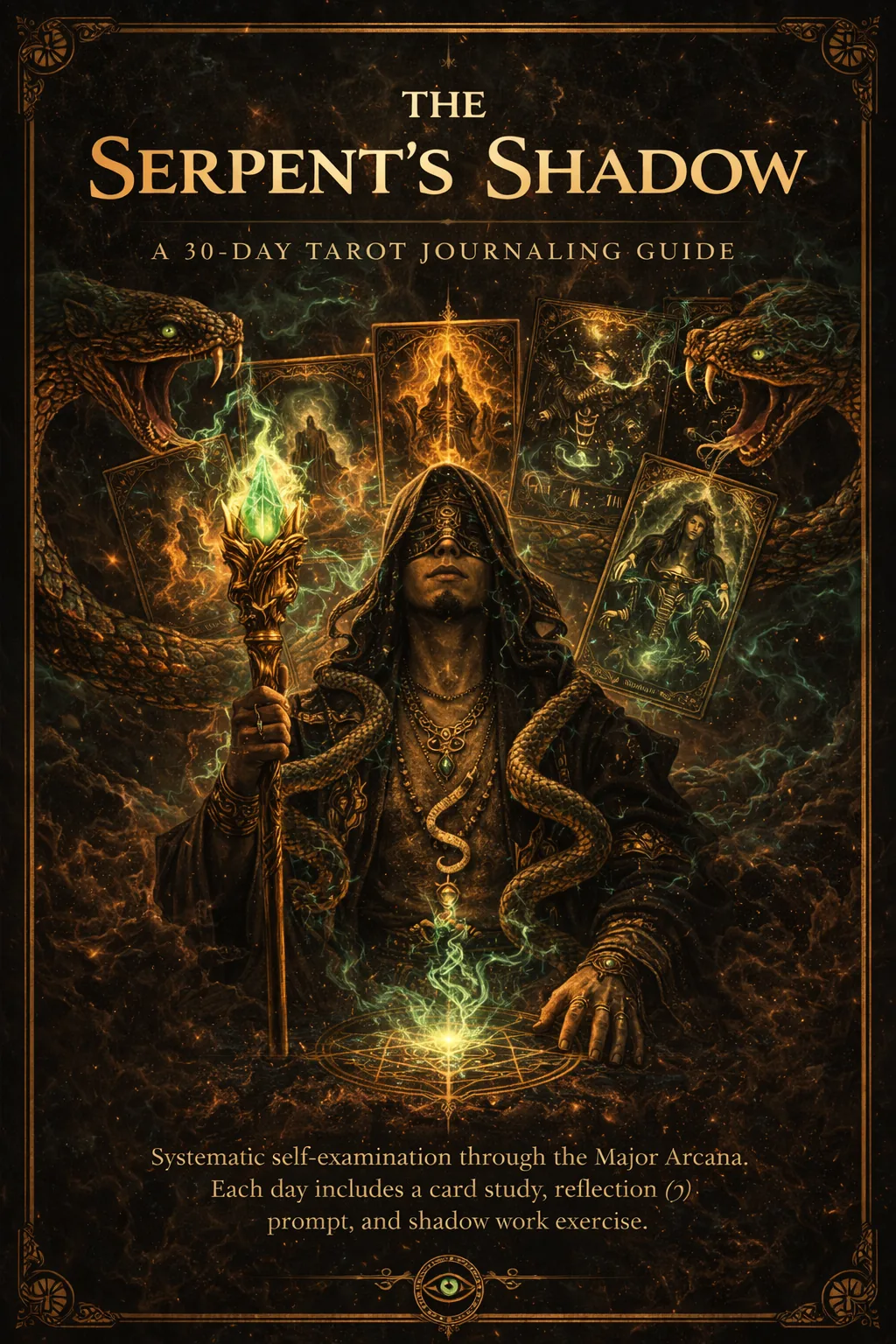
The imagery: a serpent with many eyes
The site's card centres on a vast serpent head. It has many eyes, glowing green, arranged in a ring around its brow. Below it, three human beings cannot see at all. That contrast carries the spiritual teaching. Something in the scene sees everything. The people do not.
One way to read it: the serpent is not a demon but the part of you that knows exactly what you crave and why. You have handed it all the sight. Its many eyes are your own attention, given away. The practice is to take some of that seeing back.
On the traditional Rider-Waite-Smith card, two figures stand chained to a block with collars loose enough to lift off. The site's version replaces iron with light, which suggests the bond is made of attention and could dissolve as quickly as it formed.
The lesson of card XV
In the Major Arcana, The Devil follows Temperance. Temperance is a spiritual achievement: balance, measure, the angelic mixing of opposites. The Devil comes straight after it as a test. Having found balance, can you face the parts of you that do not want balance at all?
Many spiritual paths skip this step. They reach a calm, moderate self and decide the work is done. The Devil says calm built on suppression is fragile. Next in line is The Tower, the collapse of whatever was holding the shadow down. Facing The Devil willingly makes the Tower less violent. The Fool's Journey article traces this stretch of the sequence in more detail.
Signs this energy is active in your life
- You feel a strong disgust toward a habit or trait in someone else that you quietly share.
- A spiritual practice has become another compulsion: you meditate to escape rather than to arrive.
- You feel holier after denying yourself something, then binge on it later.
- Sex, food or money carry a charge of shame you cannot explain.
- You find yourself fascinated by the dark, the forbidden or the taboo.
None of these is a failing. Each is a place where the card's material is surfacing and can be worked with.
A useful test is the body. If an urge arrives with a tight jaw, a racing chest or restless hands, it is probably The Devil's material rather than a calm preference.
The Devil reversed spiritually
Reversed, the spiritual work stalls in shame. You can see the attachment, you can name it, and you punish yourself for it instead of understanding it. Its reversed keywords, denial, shame loops and bondage, describe a cycle: indulge, condemn, promise, repeat. Spiritual language can make this worse when it turns appetite into sin.
Reversed, the card can also show spiritual bypassing: insisting you are beyond desire because you have read the right books. Either way, the remedy is the same. Get curious about what the craving is protecting you from.
A short practice: lifting the blindfold
- Sit somewhere you will not be disturbed. Close your eyes and notice the dark as a blindfold you have chosen to wear.
- Bring to mind one craving you know well. Feel where it sits in your body: chest, stomach, hands, jaw.
- Ask it, silently, "What do you want for me?" Wait. The answer is usually simpler than you expect: rest, comfort, contact, safety.
- Open your eyes slowly, as if lifting the band of light off them, and name one way to meet that need directly today.
Repeat it whenever the craving next appears. For deeper work, the shadow work spread pairs well with this practice.
Common questions
Is The Devil an evil card spiritually?
No. In tarot The Devil is not a literal evil being. It represents the instinctual and shadow parts of the psyche that have been disowned. Spiritually, it asks you to integrate those parts rather than fear them. The danger it describes is unconscious attachment, not damnation.
What does The Devil mean as a spiritual message?
It means something you have been resisting or condemning in yourself needs attention. Often it is a craving or habit that protects an unmet need. The message is to look at it honestly and with curiosity. Freedom comes from understanding the hunger, not from fighting it harder.
Why is The Devil after Temperance in the tarot?
Temperance shows balance achieved; The Devil tests it by bringing up everything that resists balance. The order suggests that genuine harmony has to include the shadow. After The Devil comes The Tower, where any false structure built to hide that shadow is broken open.
What does The Devil reversed mean spiritually?
Reversed, it often shows awareness without integration. You see your attachments but respond with shame, denial or spiritual bypassing. It can also mark the beginning of genuine release, when you stop fighting the craving and start asking what it needs. Self-compassion is the turning point.
For the full upright and reversed interpretation, read the The Devil card guide.