Shadow Lens
emotional opening · intuition · devotion
The shadow the Ace of Cups exposes
Ace of Cups shadow work looks at your ambivalence about feeling itself. Most people say they want love, closeness and inspiration. The shadow side is the part of you that resists them when they actually arrive, because real openness costs control. You might want connection and still flinch when someone offers it.
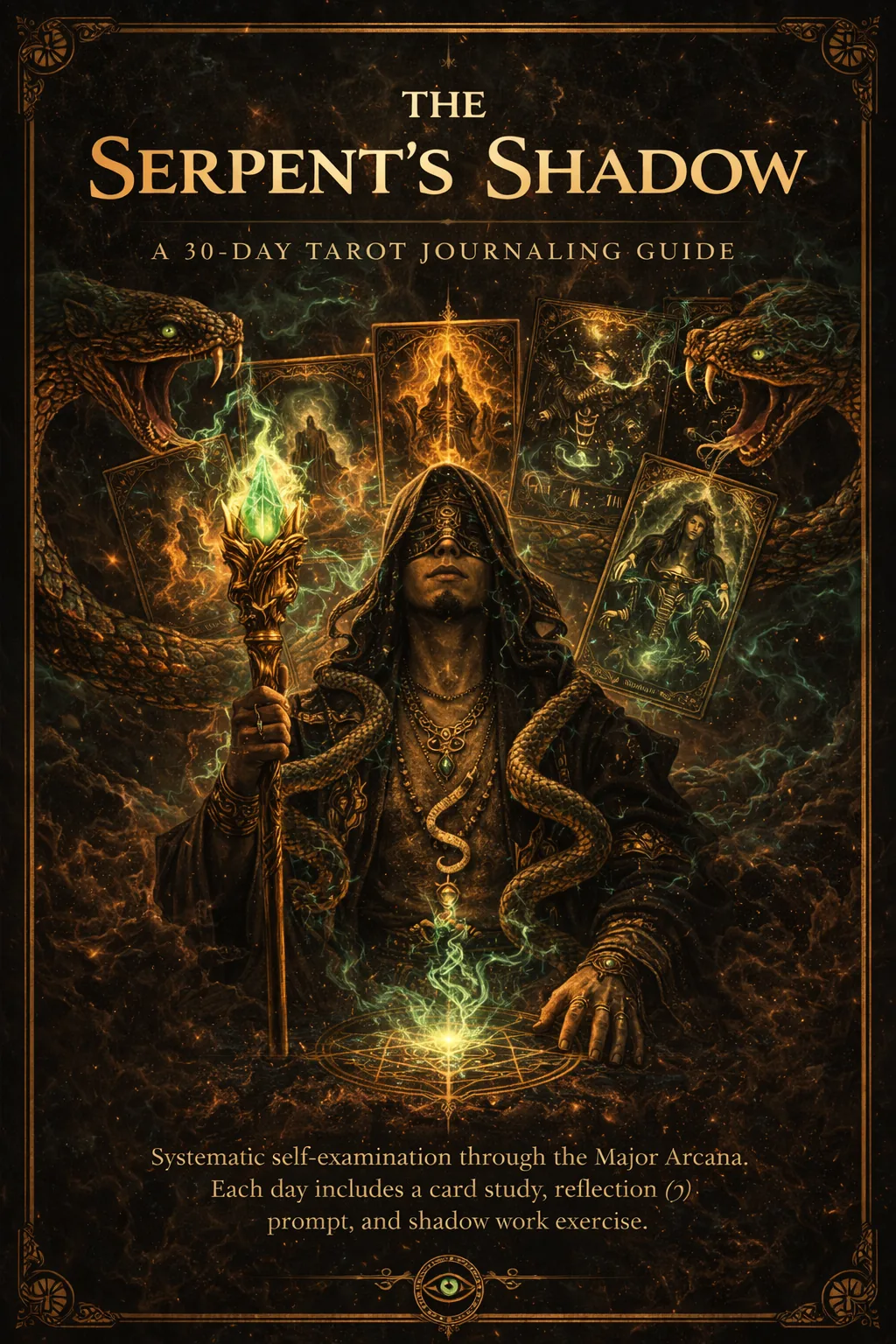
On this deck, two golden serpents rise out of the dark water on either side of the chalice, mouths open, eyes glowing green. They face the cup as guardians. Read them as the defences you have built around your own heart. They were made for good reasons, usually to survive a time when feeling was dangerous or unwelcome. The shadow work question is whether they still guard the cup, or now stop anything from reaching it. The Ace of Cups guide sets out the card's upright meaning.
How it shows up in daily life
This shadow tends to look reasonable from the outside, which is why it is easy to miss:
- You change the subject with a joke the moment a conversation turns tender.
- Someone compliments your work and you immediately list its flaws.
- You are the dependable friend everyone leans on, but you never ask for anything yourself.
- You describe painful events in a flat, factual voice, as if they happened to someone else.
- You keep yourself so busy that there is never a quiet evening in which feeling could catch up.
A concrete example: a friend offers to drive you to a hospital appointment and you insist you are fine taking two buses. Afterwards you feel oddly lonely. That gap between refusing help and missing it is exactly where this card's shadow lives.
Ace of Cups journal prompts
Choose one or two prompts per sitting. Write about specific moments rather than general traits.
- What am I ready to receive that I usually explain away?
- When did I last refuse help I actually wanted? What did I tell myself in that moment?
- Which feeling do I find hardest to let other people see: grief, need, joy, or tenderness?
- Who taught me that showing feeling was risky, and what did it cost me then?
- If my defences are the two serpents at the cup, what are they guarding me from? Is that threat still present?
- What would I have to stop controlling if I let myself care about this fully?
- When do I give care to avoid receiving it?
- What would one honest, unpolished sentence about how I feel sound like right now?
A grounding exercise for after the prompts
Shadow work around feeling can stir more than you expect. Before you close your journal, try this.
Make a warm drink and hold the cup in both hands without drinking it yet. Feel its weight and heat in your palms. Name, aloud or silently, three physical sensations: the warmth, the smoothness of the cup, the steam on your face. Then take one slow sip and notice it travel down. The point is to let your body practise receiving something small and pleasant, with nothing required in return. If strong emotion surfaced in your writing, it may help to talk it through with someone you trust or with a professional.
The reversed shadow: flooding and emptying
When the card is reversed, the shadow can take two forms. One is numbness: the armour has thickened so far that you no longer notice what you feel at all. The other is flooding: feeling pours in or out with no container, so you swing between intense openness and sudden withdrawal, or give care until you are drained.
Both are attempts to manage a cup that feels unsafe to hold. The Ace of Cups reversed page describes these patterns in more everyday terms. The Four of Cups shadow work page is a useful companion if your pattern is turning away from offers out of apathy rather than fear.
Integration: lowering the guard, not removing it
Integration does not mean getting rid of your defences. The serpents on the card are not attacking the cup; they flank it. Healthy protection lets you choose when and with whom to open. The goal is to make that a choice instead of a reflex.
Start small. Accept one offer of help this week without arguing. Tell one person one true feeling in a single sentence. Notice what happens in your body afterwards, and write it down. Over time, you build evidence that the cup can be filled without breaking. For a structured session, the shadow work spread pairs well with these prompts.
Common questions
What is the shadow side of the Ace of Cups?
The shadow side is emotional armour: wanting love, help and connection while unconsciously pushing them away when they arrive. It shows up as deflection, self-sufficiency taken too far, or giving care constantly so you never have to receive it. Reversed, it can also appear as numbness or emotional flooding.
How do I use the Ace of Cups for shadow work?
Use the card as a mirror for how you handle feeling and receiving. Pick a recent moment when you deflected care or emotion, write about what you were protecting, and then practise one small act of receiving. Ground yourself afterwards so the work stays manageable.
What journal prompt goes with the Ace of Cups?
A core prompt is: what am I ready to receive that I usually explain away? Others include asking when you last refused help you wanted, which feeling you hide most, and what you would have to stop controlling if you let yourself care fully about something.
For the full upright and reversed interpretation, read the Ace of Cups card guide.